Seattle Colleges Profile
Seattle Colleges is a district composed of three colleges and several specialty training centers. We have a unique opportunity to hire three presidents—one for each of our three colleges, North Seattle College, Seattle Central College, and South Seattle College. The following information provides a districtwide perspective and links to more college-specific information.
About Seattle Colleges
Seattle Colleges is Washington state’s largest community college district, with approximately 33,685 students enrolled (Fall 2025) and 2,000 employees. It is composed of North Seattle College, Seattle Central College, South Seattle College, several specialty training centers across Seattle, and a district office.
Seattle Colleges offers more than 130 workforce education and training programs, including bachelor’s degrees in high-growth industries, associate degrees in various disciplines, and transfer degrees to universities throughout the United States, as well as numerous certificate programs.
Accreditation and State Board
Seattle Colleges is accredited by the Northwest Commission on Colleges and Universities (opens in new tab), an institutional accrediting body recognized by the Council for Higher Education Accreditation and the U.S. Department of Education. Each college is accredited individually.
All three colleges (North, Central, and South) are among the 34 public community and technical colleges in Washington state that are members of the Washington State Board for Community and Technical Colleges (opens in new tab) (SBCTC). The SBCTC is governed by a nine-member, governor-appointed board and is responsible for administering the Community and Technical College Act (new tab).
Our Mission, Vision, and Values
Our Mission
As an open-access learning institution, Seattle Colleges prepares each student for success in life and work, fostering a diverse, engaged, and dynamic community.
Our Vision
Seattle Colleges is recognized as an exemplary learning institution that transforms lives, promotes equity, and enriches the community.
Our Values
- Accessibility for all learners and partners
- Collaboration through open communication and commitment to working together
- Diversity, Inclusion, and Equity for all individuals, particularly the underserved in our community
- Fiscal Sustainability for long-term viability and excellence in service and operations
- Growth and Engagement of faculty and staff through professional development
- Innovation in instruction, student services, operations, and organizational culture
- Integrity by adhering to the highest standards of ethics and public stewardship
Our Leadership
Seattle Colleges is governed by a five-member board of trustees appointed by the Washington state governor and approved by the state Senate. Trustees serve sequential five-year terms.
Trustees are responsible for hiring the chancellor, who is the chief executive officer for Seattle Colleges and reports to the board.
The college presidents of North Seattle College, Seattle Central College, and South Seattle College report to the chancellor. They also are members of the chancellor's cabinet.
Learn more about our leadership and organizational structure.
Our Strategic Plan
Seattle Colleges’ strategic planning process is cyclical, with planning, implementation, and review built into each comprehensive strategic plan. The board of trustees—in consultation with the district community, including faculty, staff, students, administrative leadership, and external partners—initiates and approves each plan.
The most recent planning phase took place in 2023-2024 and culminated in the multiyear Seattle Colleges Strategic Plan for 2025 and beyond. Ultimately, this Strategic Plan acknowledges our proud history, short-term challenges, and opportunities while identifying future directions, aspirations, and operational strategies. It also affirms our fundamental mission: to prepare each student for a successful life and work in a diverse, global, and dynamic society.
Our Colleges
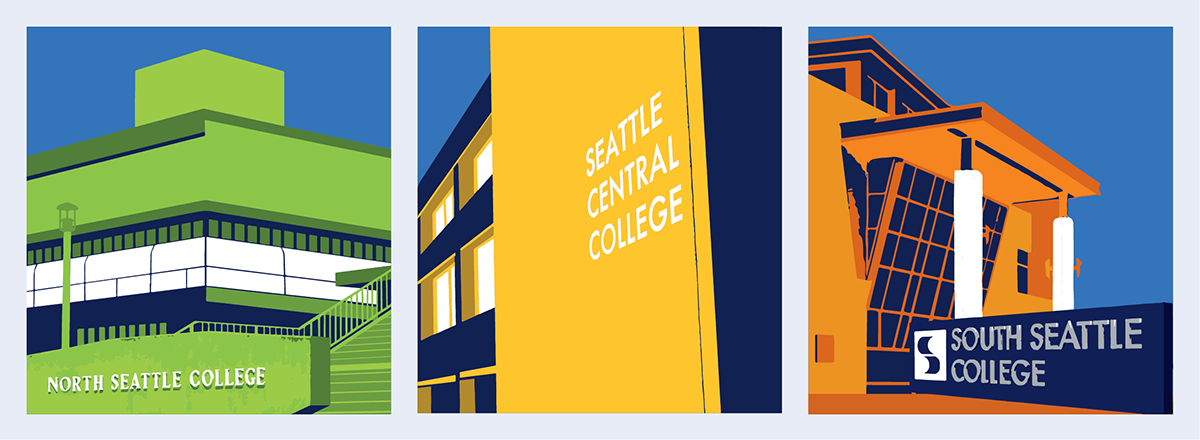
Seattle Colleges is composed of three colleges (North Seattle College, Seattle Central College, and South Seattle College), several specialty centers, and a district office.
Locations
North Seattle College
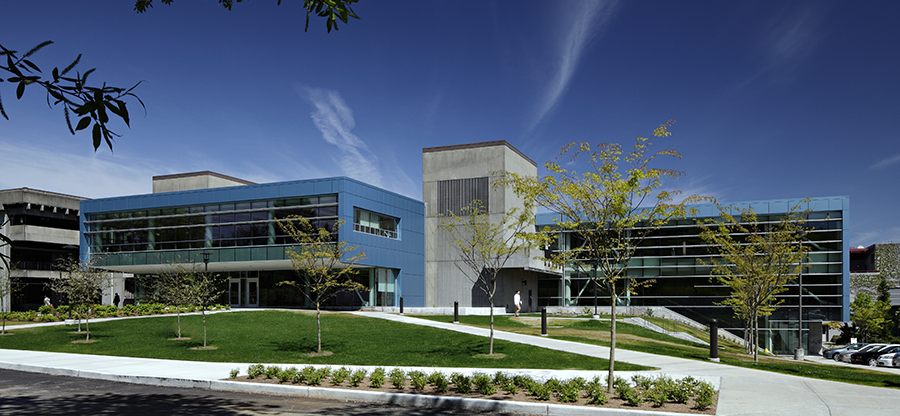
Established in 1970, North Seattle College provides learning opportunities for a diverse group of more than 10,000 students each year. Lush nearby wetlands, vibrant green spaces, and a community garden make North’s campus a respite from the bustling city, but it is well connected by the neighboring Northgate light rail station. North is the starting point for many students who transfer to top universities across the country. Strong academic preparation and advising services, small classes, an innovative integrated studies program, broad e-learning options, and a variety of partnerships with four-year schools contribute to student success. North also offers six bachelor’s degrees: Accounting with an International focus, Application Development, Computer Science, Early Childhood Education, International Business, and Residential and Commercial Property Management.
Learn more: northseattle.edu
Seattle Central College
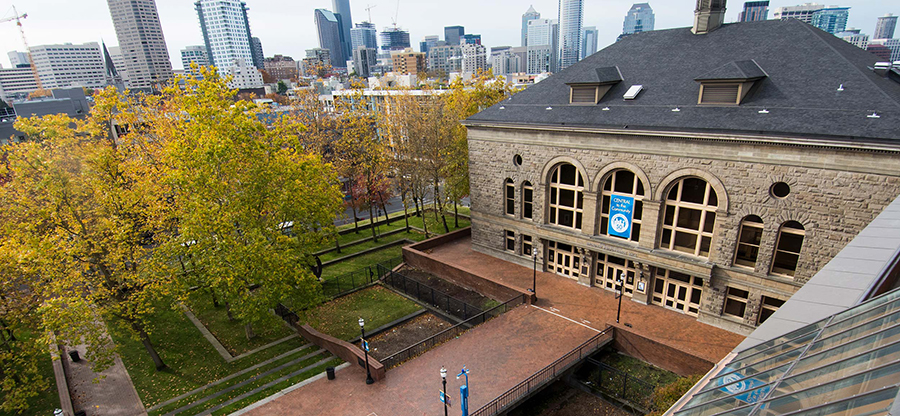
Established in 1966 as Seattle’s first community college, Seattle Central College has grown into a thriving center for higher education in the heart of Washington’s largest city. Central offers college transfer, career training, continuing education, and basic studies programs to more than 10,000 students each year. While Central’s home is the vibrant Capitol Hill neighborhood, with its renowned food, art, music, and culture, the college’s perspective is global, with the nation’s sixth-largest community or technical college international program, hosting more than 1,000 students from around the world each year. Central also offers bachelor’s degrees in Applied Behavioral Science, Community Health and Education, Dental Hygiene, Health Care Services Management, and Respiratory Care.
Central administers three specialty training centers:
- The Health Education Center is a world-class training facility for our excellent healthcare programs. It is located in the historic Pacific Tower on Beacon Hill.
- Seattle Maritime Academy is located in a state-of-the-art facility in the Ballard neighborhood. It prepares skilled mariners to fill vital roles in all sectors of the maritime industry, from ferries to fishing vessels, tugboats to tankers.
- The Wood Technology Center is located in a modern facility in Seattle’s Central District and focuses on preparing students for work in the building trades, including carpentry, boat building, and construction.
Learn more: seattlecentral.edu
South Seattle College
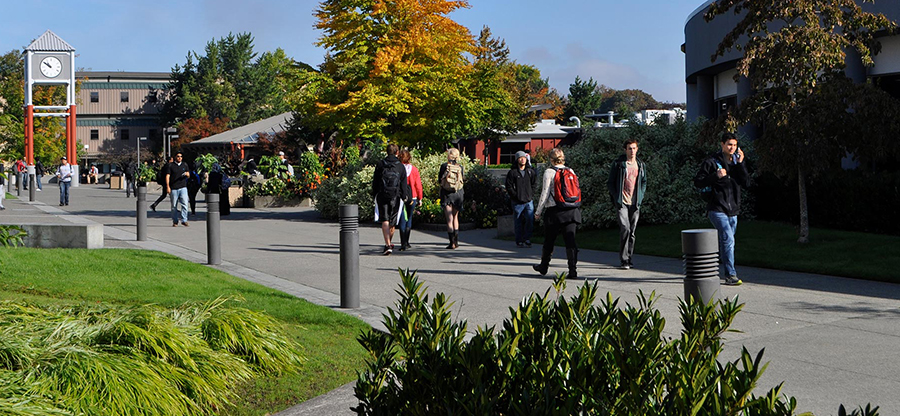
Established in 1969 with a spacious 87-acre main campus on a hilltop in West Seattle, South Seattle College serves as a portal of opportunity each year for approximately 9,000 students with diverse needs to meet their educational and career goals. South prepares students for immediate employment or successful transfer to four-year colleges and universities, and it has the largest apprenticeship training program in the state at the Georgetown campus. South also offers bachelor’s degrees in Hospitality Management and Sustainable Building Science Technology.
South administers two specialty training centers and is in a public-private partnership to operate a third:
- Located in Seattle’s industrial Georgetown neighborhood, the Georgetown campus is known as the area’s premier workforce education and training center.
- NewHolly Learning Center is a community resource for southeast Seattle. It is located on Beacon Hill.
- Harbor Island Training Center is a public-private partnership established on-site at Vigor Industrial Shipyards to train maritime welders for the regional shipbuilding and repair community.
Learn more: southseattle.edu
Seattle Colleges District Office at Siegal Center
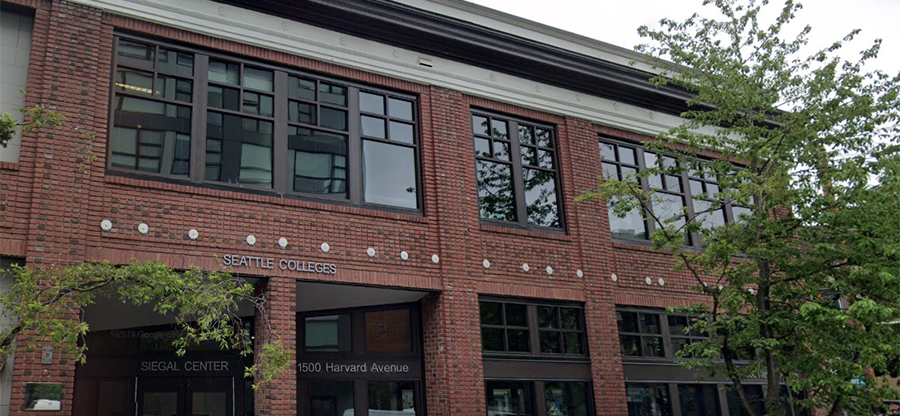
Our district office is located one block south of Seattle Central’s Broadway Edison Building in Seattle’s Capitol Hill neighborhood. The district office represents Seattle Colleges on the State Board for Community and Technical Colleges (SBCTC) for purposes of enrollment and budget allocations. With offices in Siegal Center, the chancellor’s senior administrative leadership team leads and coordinates districtwide functions, activities, and services. Administrative units—including Academic and Student Success; Business and Finance; Advancement/Foundation; the Chancellor's Office; District Communications and Strategic Initiatives; Equity, Diversity, Inclusion, and Community (EDIC); Government Relations; Human Resources; Information Technology; and Workforce Education—have offices there that serve the entire district.
Learn more: seattlecolleges.edu
For more information:
- Learn more and meet our colleges by reading our viewbook.
- View districtwide news items and media coverage in our News Center.
- Read our most recent League for Innovation Report.
Our Student Demographics
Like our city and surrounding region, our student body is dynamic and among the most diverse in the Pacific Northwest.
Data Archives
| North Seattle College | Seattle Central College | South Seattle College |
|---|---|---|
| 12,074 total students | 12,088 total students | 9,675 total students |
| 32% male, 55% female, 1% nonbinary, 12% not reported | 37% male, 52% female, 1% nonbinary, 9% not reported | 59% male, 32% female, <1% nonbinary, 9% not reported |
| 6% of students are parents | 6% of students are parents | 3% of students are parents |
| 37% identify as students of color | 54% identify as students of color | 47% identify as students of color |
| 25% full-time students | 43% full-time students | 40% full-time students |
| 75% part-time students | 57% part-time students | 60% part-time students |
| Median age is 31 | Median age is 26 | Median age is 28 |
| North Seattle College | Seattle Central College | South Seattle College |
|---|---|---|
| 11,394 total students | 11,073 total students | 9,216 total students |
| 32% male, 55% female, <1% nonbinary, 13% not reported | 36% male, 53% female, 1% nonbinary, 9% not reported | 60% male, 30% female, <1% nonbinary, 10% not reported |
| 6% of students are parents | 6% of students are parents | 3% of students are parents |
| 36% identify as students of color | 53% identify as students of color | 42% identify as students of color |
| 23% full-time students | 55% full-time students | 31% full-time students |
| 77% part-time students | 45% part-time students | 69% part-time students |
| Median age is 34 | Median age is 28 | Median age is 29 |
| North Seattle College | Seattle Central College | South Seattle College |
|---|---|---|
| 10,731 total students | 10,178 total students | 8,892 total students |
| 33% male, 53% female, <1% nonbinary, 17% not reported | 35% male, 52% female, <1% nonbinary, 12% not reported | 61% male, 32% female, <1% nonbinary, 7% not reported |
| 5% of students are parents | 5% of students are parents | 3% of students are parents |
| 37% identify as students of color | 56% identify as students of color | 43% identify as students of color |
| 23% full-time students | 47% full-time students | 30% full-time students |
| 77% part-time students | 53% part-time students | 70% part-time students |
| Median age is 31 | Median age is 25 | Median age is 28 |
Source: the data above is provided by the Seattle Colleges Office of Institutional Effectiveness. For more information, see our data dashboard.
Our People
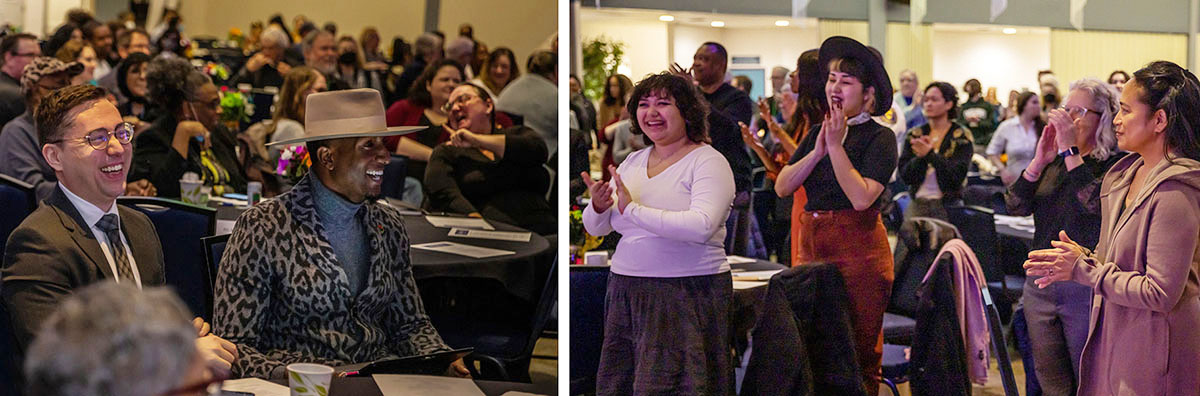
Seattle Colleges has more than 2,000 employees.
- Full-time faculty employees: 271
- Part-time faculty employees: approximately 500 per quarter
- Classified staff employees: 420
- Professional staff employees: 208
- Exempt nonrepresented employees: 155
- Part-time temporary hourly employees: 555
More than 70 percent of our employees are represented by one of three unions:
- American Federation of Teachers (AFT) Seattle Local 1789, AFL-CIO
- American Federation of Teachers Seattle Professional Staff (AFT-SPS) Local 6550, AFL-CIO
- Washington Federation of State Employees (WFSE), AFSCME Council 28, AFL-CIO
Source: the data above is from April 2023 and is provided by the Seattle Colleges Office of Human Resources.
Our Programs

Seattle Colleges' 130-plus programs are organized around eight areas of study.
- Arts, Design, and Graphics
- Business and Accounting
- Culinary, Hospitality, and Wine
- Education and Human Services
- Health and Medical
- Science, Technology, Engineering, and Math
- Skilled Trades and Technical Training
- Social Sciences, Humanities, and Language
We offer:
- Bachelor's degrees
- Associate of Applied Science, Arts, Business, Science, and Fine Arts transfer degrees
- Career and Technical Education
- Certificates
- General Education Degree preparation
- ESL/Basic and Transitional Studies
For more information:
- View a comprehensive listing of our degree and certificate programs
- Basic and Transitional Studies
- Continuing Education
- Corporate and Customized Training
- High School Programs
- International Programs
- Seattle Promise - up to two years of paid tuition and academic and social support open to graduates of Seattle public high schools

Our City
Seattle is an urban, cosmopolitan hub surrounded by water, forests, and mountains. As a major port and Washington state's largest city, Seattle is a center of not only commerce and tourism, but also technology, healthcare, education, and the arts. Its diverse population and eclectic neighborhoods create a rich cultural diversity that is reflected in its businesses, restaurants, events, and music.
We acknowledge that we occupy the traditional ancestral lands of the Coast Salish peoples, specifically the Duwamish, Muckleshoot, Tulalip, Snoqualmie and Suquamish—a people that are still here, continuing to honor and bring to light their ancient heritage.
For more information: